

When people think of cheesecake, most think of cream cheese, lots of sugar, and a butter cookie crust. It’s delicious, but what about fiber? Unfortunately, there’s hardly any.
Yet fiber is exactly what most of us don’t get enough of. Making sure you get enough protein is important, but fiber shouldn’t be neglected in your diet either.
For me, healthy baking recipes aren’t the ones that leave out the most ingredients, but the ones that include the right ones. A good mix of everything – for a belly full of happiness. If you’d like to learn more about Good Mood Food, I highly recommend my cookbook “Ein Bauch voll Glück“*. 🙂
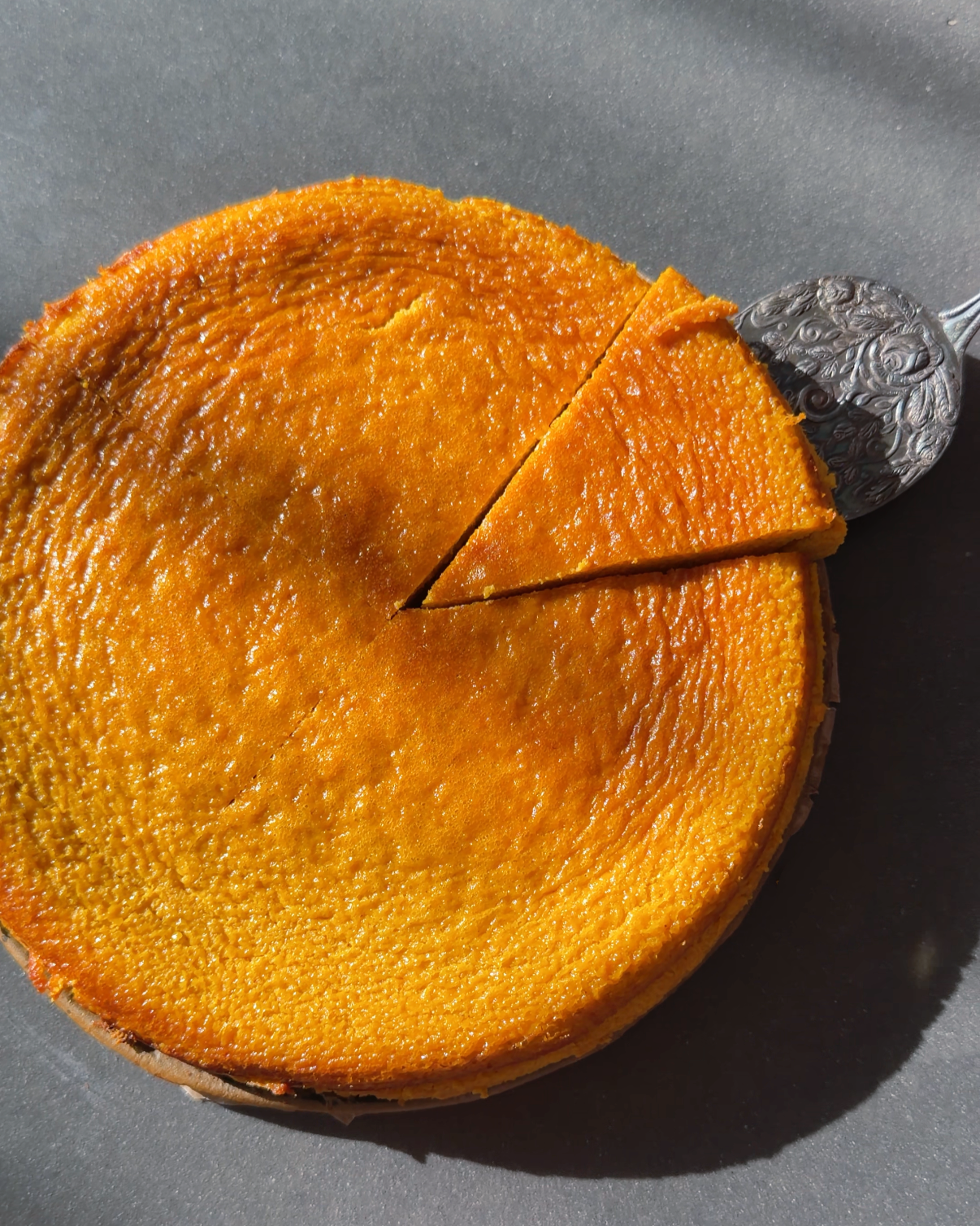
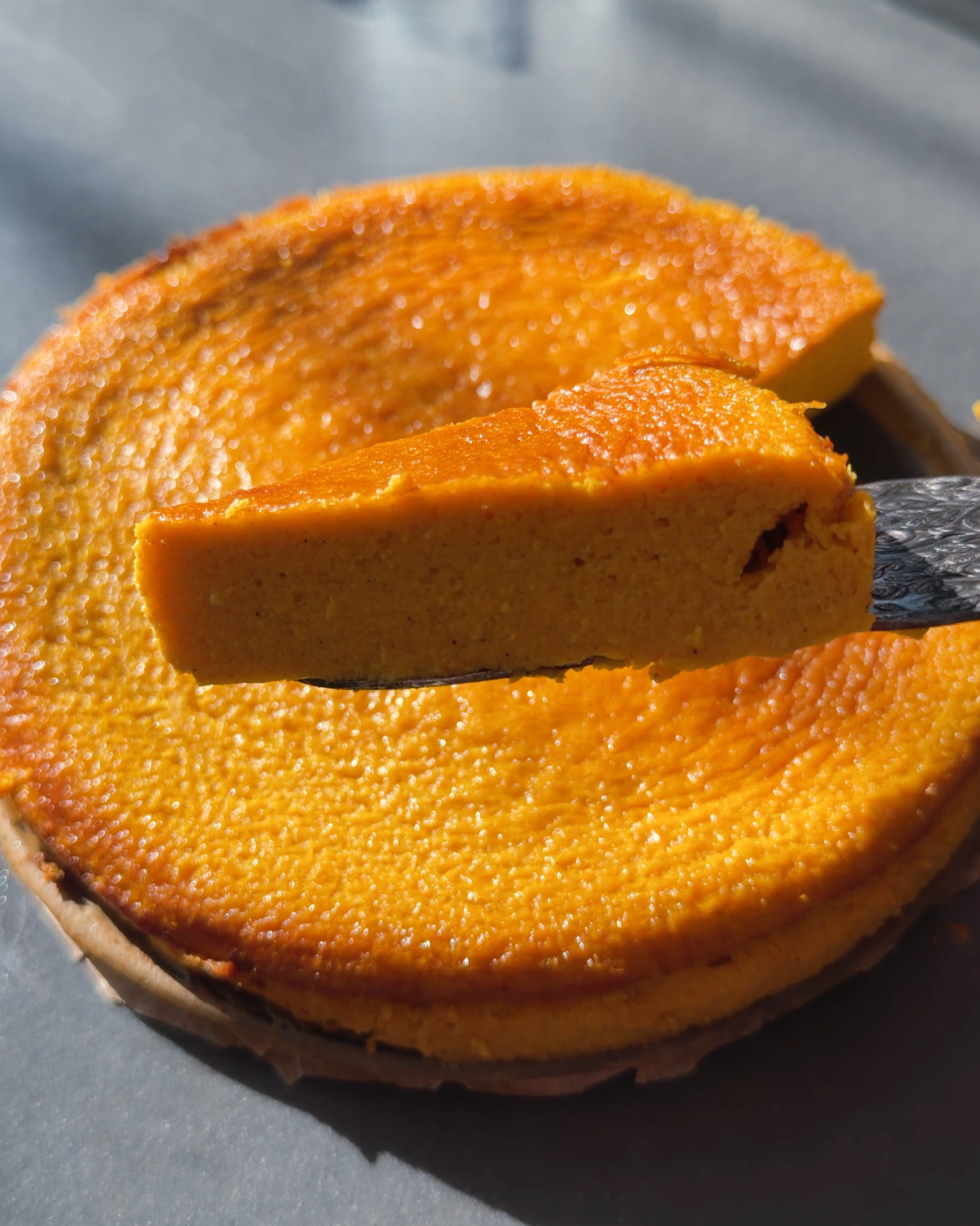
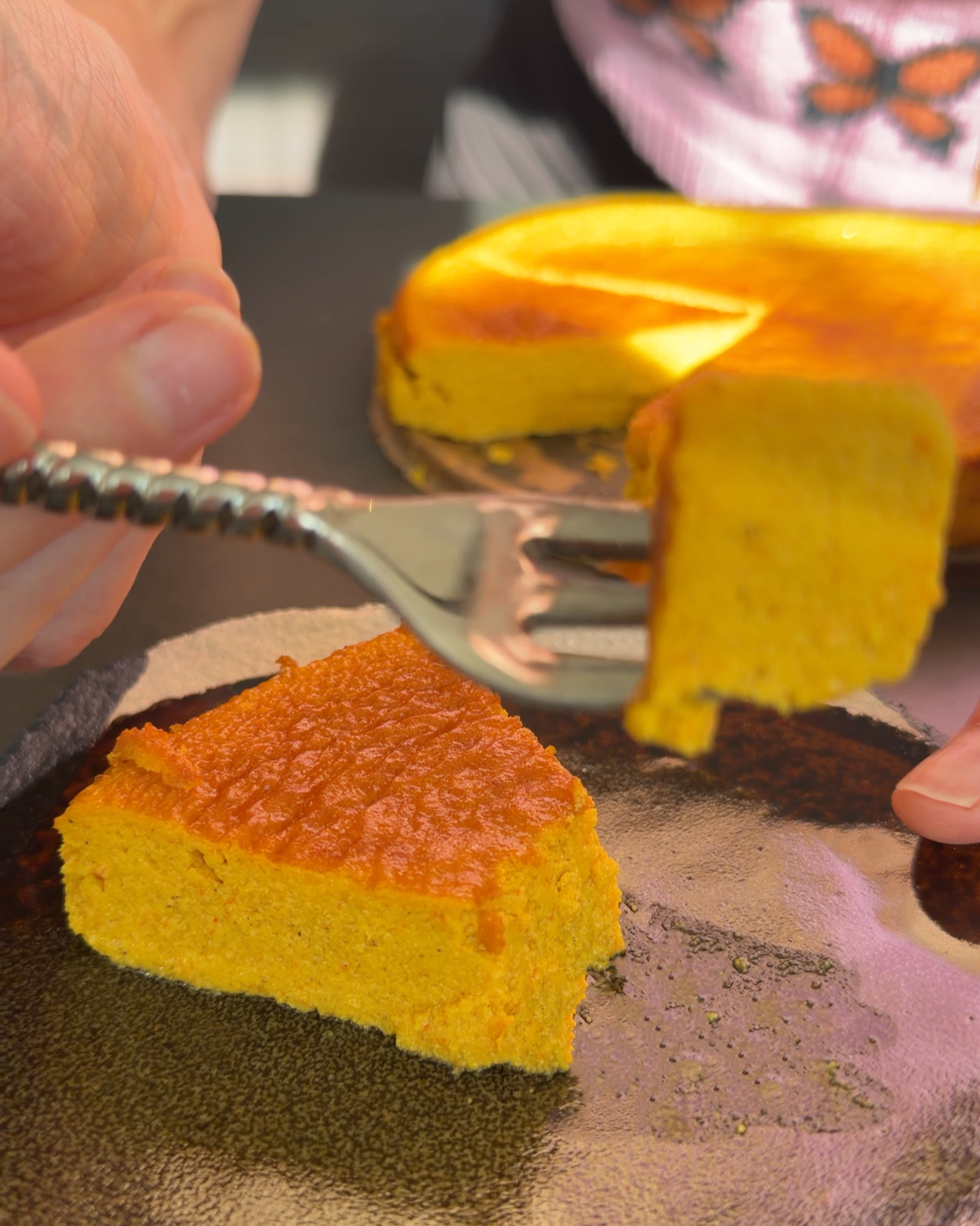
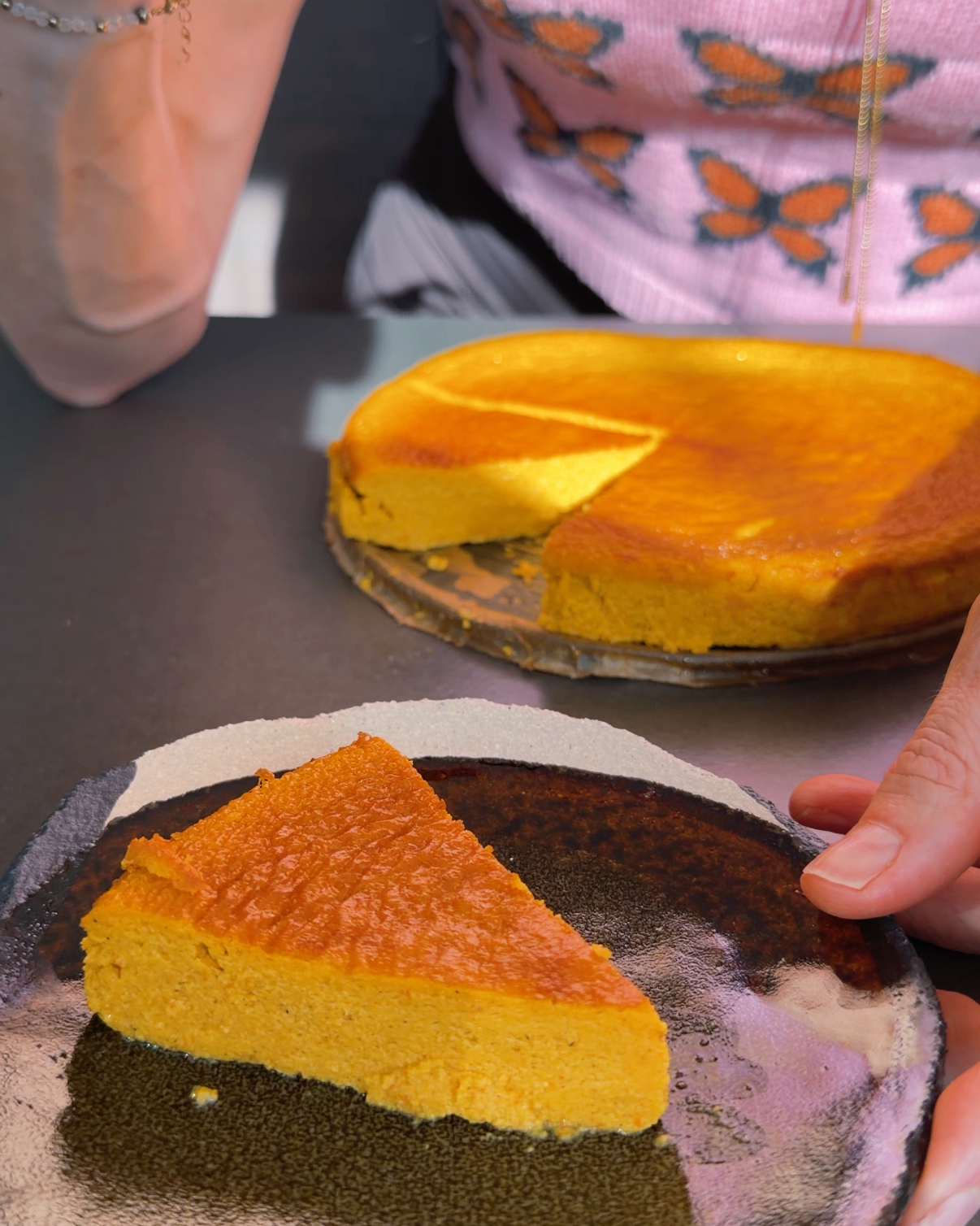
This pumpkin cheesecake is a real “good-mood” recipe. It contains no flour, added sugar, or crust. Instead, pumpkin forms the base and provides more valuable nutrients than you might think. The entire cheesecake has just 495 calories and, thanks to soy skyr, delivers a full 36 grams of protein.
For me, this is exactly the kind of cake you can even enjoy for breakfast. After all, why should cake be just a sweet treat when it also provides valuable nutrients?
Why Fiber Matters in Baking
The recommended daily intake is at least 30 grams of fiber. However, most people only get 18 to 20 grams. I’d say that most cakes don’t contribute much to this, since they’re made almost entirely of white flour, sugar, and fat.
Fiber is food for your gut bacteria. It keeps you feeling full longer and ensures that your blood sugar rises more gradually after a meal. Especially when it comes to something sweet, that’s the key difference between an energy spike followed by a crash and a slice of cake that simply leaves you feeling satisfied.
That’s why it’s worth asking yourself with every baking recipe: What does this recipe add to my body, rather than just what does it take away?
What Pumpkin Brings to the Table
Fiber instead of flour. 200 grams of Hokkaido pumpkin provide about 5 grams of fiber. Not only does it replace the flour here, but it also makes the cheesecake moist and gives it its beautiful color.
Pectin. Some of the fiber in pumpkin is soluble. It swells in the intestines, keeping you full longer.
Beta-carotene. This is a natural plant pigment. It’s what gives the cheesecake its orange color. Your body converts it into vitamin A as needed.
To be honest: A cheesecake isn’t really exceptionally high in fiber in the strictest sense. The proportion of eggs and quark is simply too high for that. But compared to a classic cheesecake with a cookie crust, it’s a real upgrade. If you want to bake something that’s truly high in fiber, be sure to check out my high-fiber, sugar-free apple bread—one slice provides 3 grams of fiber.
Pumpkin Cheesecake
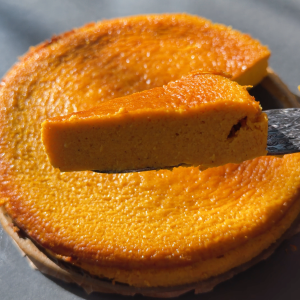
Pumpkin Cheesecake Without Flour or Sugar
Equipment
- 1 round springform pan, 18–20 cm in diameter
Ingredients
- 200 g pumpkin, steamed or baked
- 200 g skyr (soy or other)
- 3 eggs
- 100 g erythritol
- 1,5 tsp cinnamon or pumpkin spice
- 1 tsp vanilla
Instructions
- Preheat the oven to 170 degrees Celsius (top and bottom heat) and line the pan with parchment paper.
- Puree the pumpkin, skyr, eggs, erythritol, cinnamon, and vanilla with a hand blender or in a food processor until smooth.
- Pour the mixture into the greased pan and bake for 40 to 45 minutes, until the center is just slightly jiggly. If the cake browns too quickly, cover it with a plate or parchment paper.
- Let it cool, then refrigerate overnight before topping and slicing.
Notes
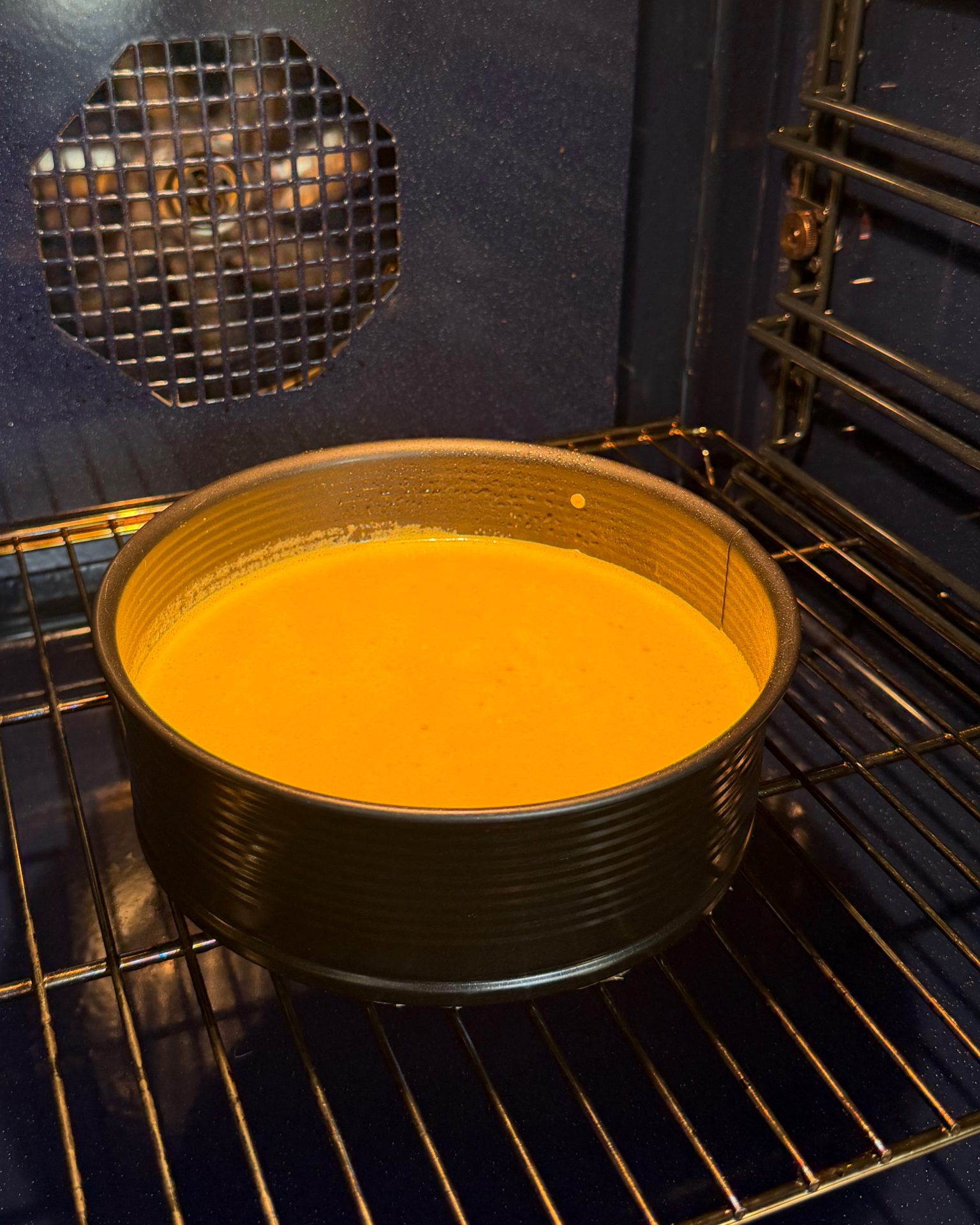
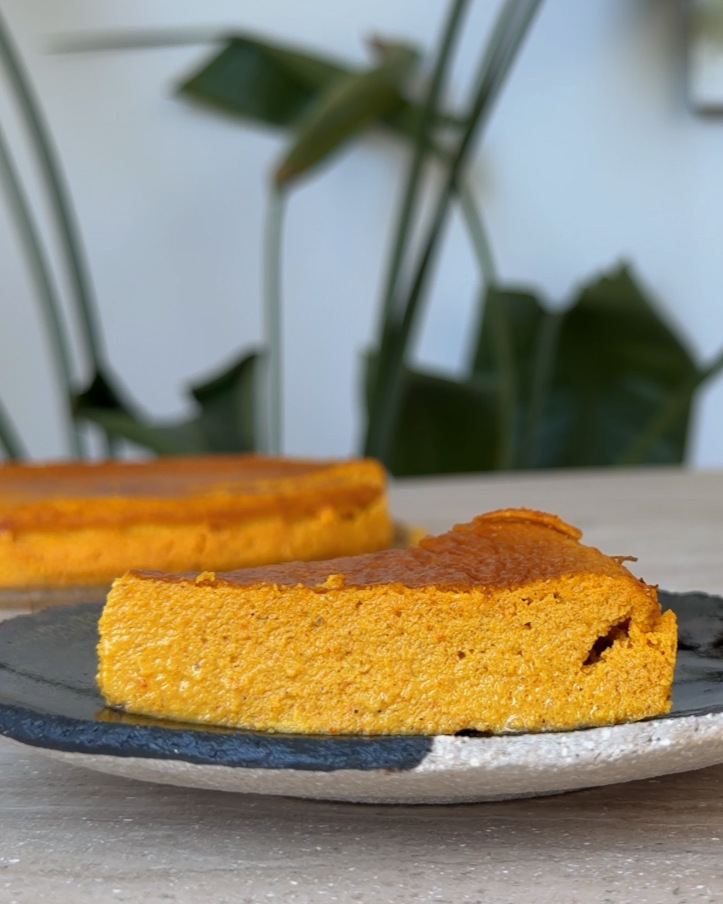
What You Should Know
Bake or steam the pumpkin – don’t boil it. Boiled pumpkin absorbs water, which ends up in the cheesecake later. When baked, it’s drier and more flavorful. This makes the mixture creamy instead of mushy.
The eggs replace the flour. They bind the mixture during baking, just like in a flan. If you only have 2 eggs, stir in 1 to 2 tablespoons of cornstarch and simply bake the cake 5 minutes longer.
100 grams of erythritol may sound like a lot, but it works. Erythritol is only about 70 percent as sweet as sugar. The quark and pumpkin contribute almost no natural sweetness. You don’t need to grind the erythritol beforehand, since it dissolves in the moist mixture. Personally, 70g would be enough for me, but my guests usually find it not sweet enough that way.
The longer it chills, the better. When warm, the center of the cake is still soft. It only becomes firm enough to slice and truly creamy once it’s been refrigerated.
If you use skyr instead of soy quark, you’ll get significantly more protein – but then it’s no longer dairy-free.
Did you try making this pumpkin cheesecake?
If so, feel free to leave me a comment below this post. Also, share a photo of your creation on Instagram and tag me @annelinawaller and add the hashtag #annelinawaller.
I hope you have fun baking this and enjoy tasting it. 💛
Your Annelina

Leave a Reply