

When it comes to healthy baking recipes, many people think of sugar first: How much is in it, what can be used as a substitute, and how can you cut back on it?
But the real problem often lies elsewhere. While we usually exceed the recommended intake of sugar, most people consume far too little fiber – often only about half the recommended amount.
That’s why I think the more interesting question when baking isn’t what to leave out, but what to add that makes sense.
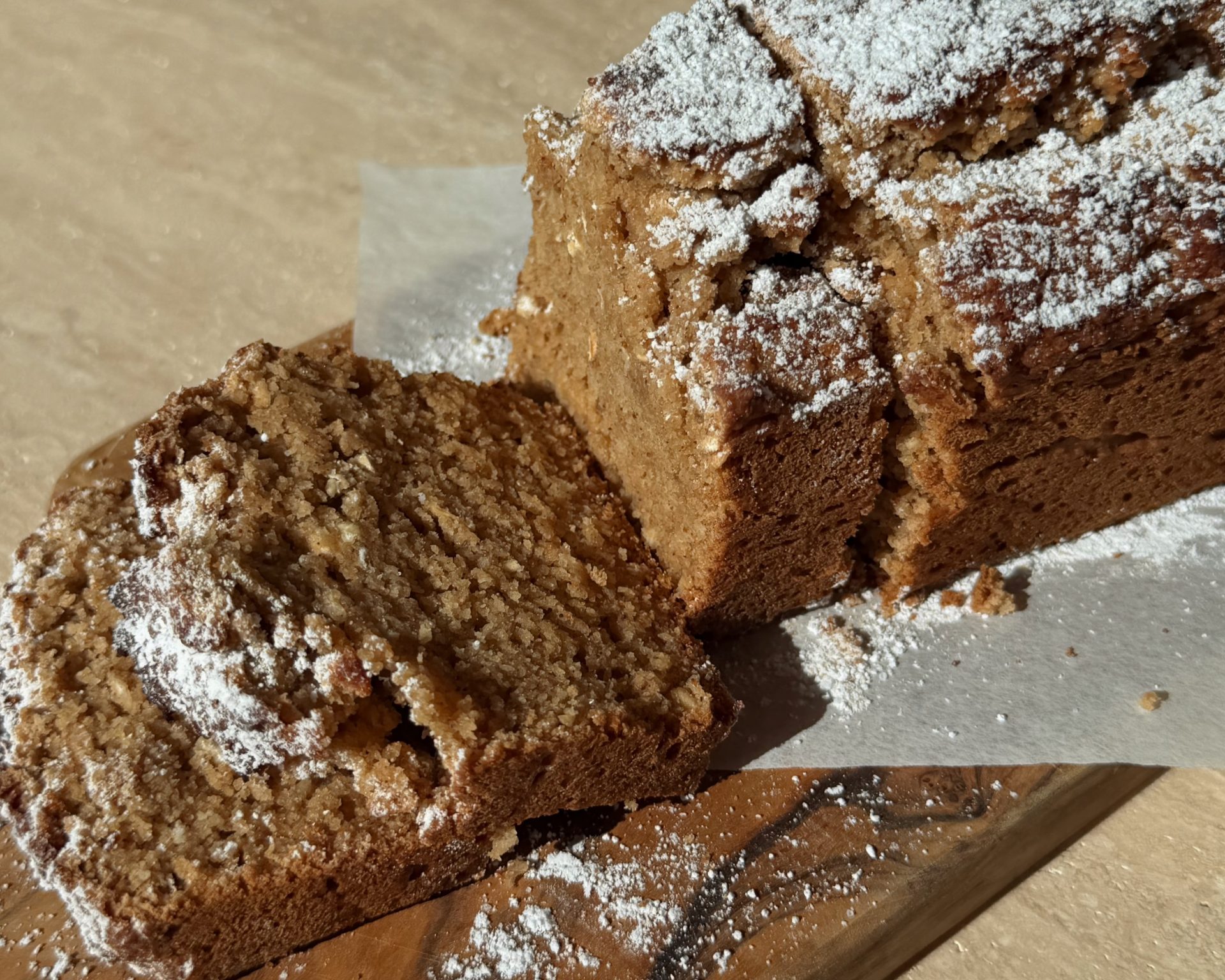
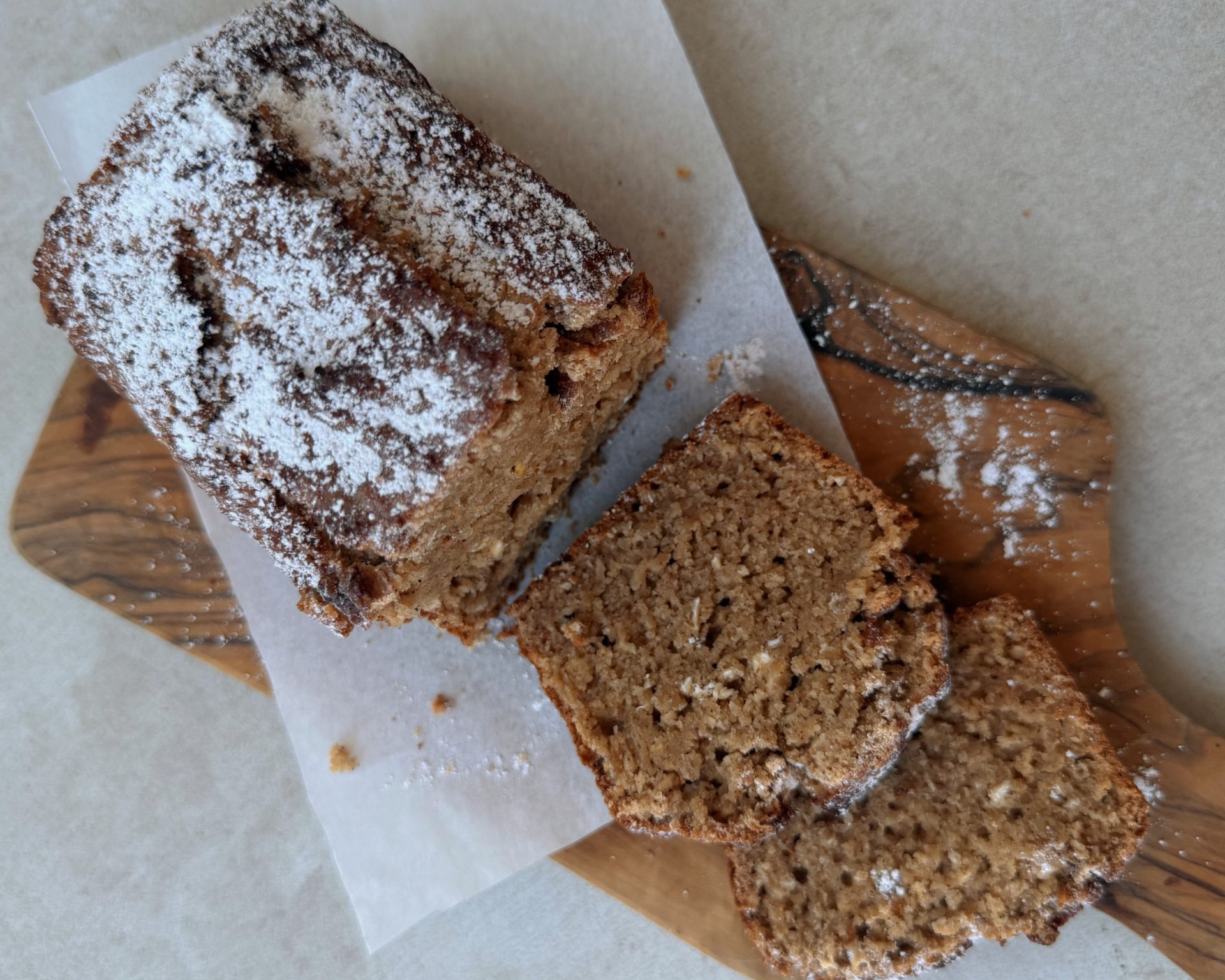
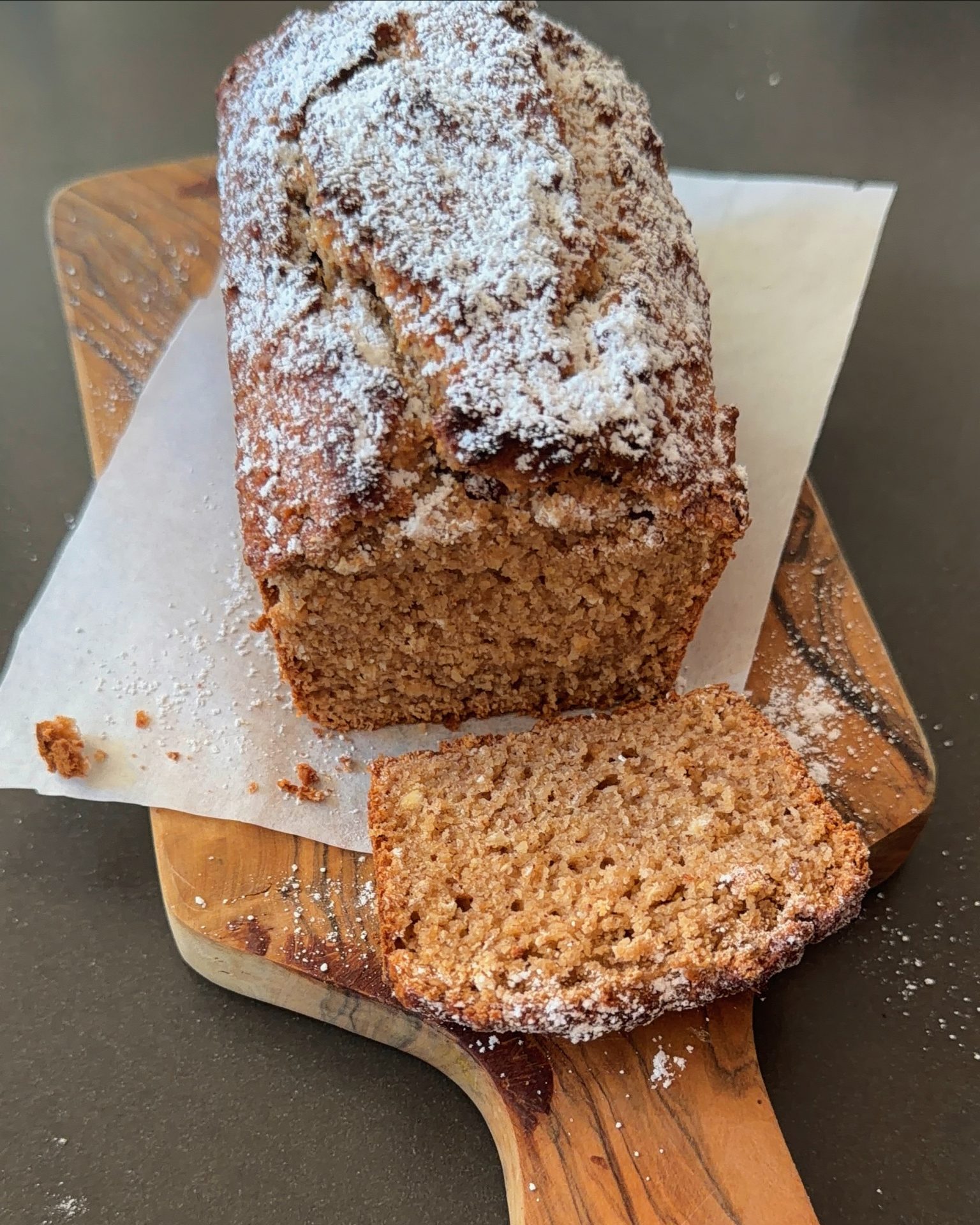
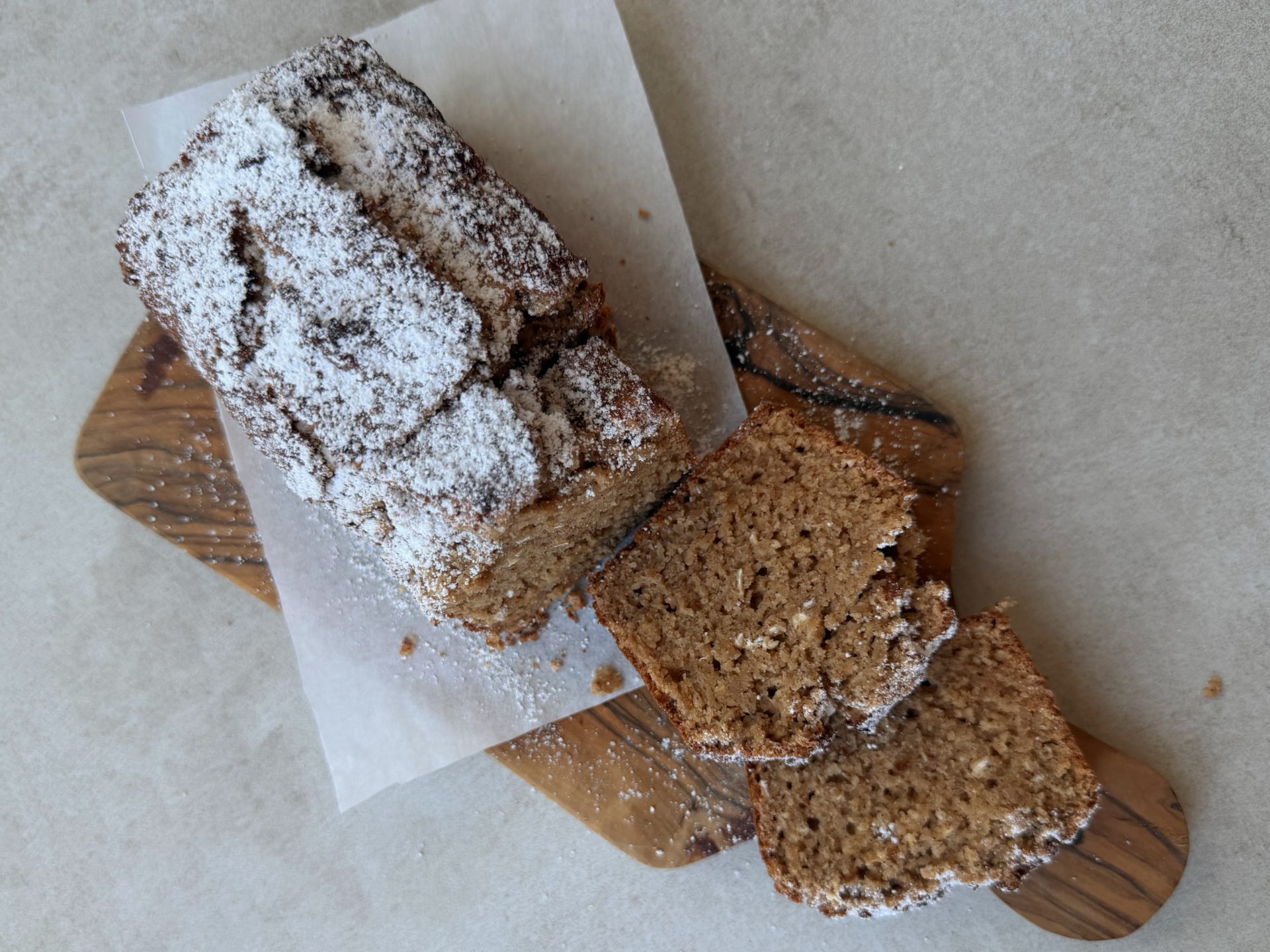
That’s exactly why I love this apple bread so much. It doesn’t contain any sugar, but for me, that’s just an added bonus. What’s much more important is that the oats provide valuable fiber and the bread is satisfyingly filling without tasting like “healthy diet bread.” A single slice already contains about 3 grams of fiber and can be easily incorporated into your daily routine.
Why Fiber Is So Underestimated
The recommended daily intake is at least 30 grams of fiber. In reality, however, most people only consume about 18 to 20 grams. This gap cannot be easily closed by eating just one apple.
But it’s about much more than just digestion. Fiber serves as food for gut bacteria. When broken down, it produces short-chain fatty acids, which, among other things, nourish the intestinal lining.
Oats offer an additional benefit: beta-glucan. This is a soluble fiber that forms a gel-like structure in the gut. This can help slow the absorption of sugar into the bloodstream. Beta-glucan also binds to bile acids, which can have a positive effect on cholesterol levels.
In practical terms, this means you stay full longer and your blood sugar rises more steadily. This is exactly the difference many people notice between a slice of oat bread and a piece of yeast plait.
What Makes This Apple Bread High in Fiber
Three ingredients make this apple bread particularly high in fiber:
Oats instead of white flour. Oatmeal contains about 10 grams of fiber per 100 grams, while Type 405 wheat flour contains less than 4 grams. This is the biggest factor in the entire recipe. I simply grind the oats myself – more on that in a moment.
Apple puree as a base. It replaces some of the fat while also providing pectin, a soluble fiber.
No sugar. It’s sweetened with erythritol. While this doesn’t affect the fiber content, it ensures the dough isn’t made up largely of sugar. This way, oats remain the main ingredient.
I’ve deliberately left out psyllium husks, flaxseeds, and additional bran. Of course, you could add all of those, but for a high-fiber apple bread, it’s not necessary at all. Oats alone already provide a considerable amount of fiber.
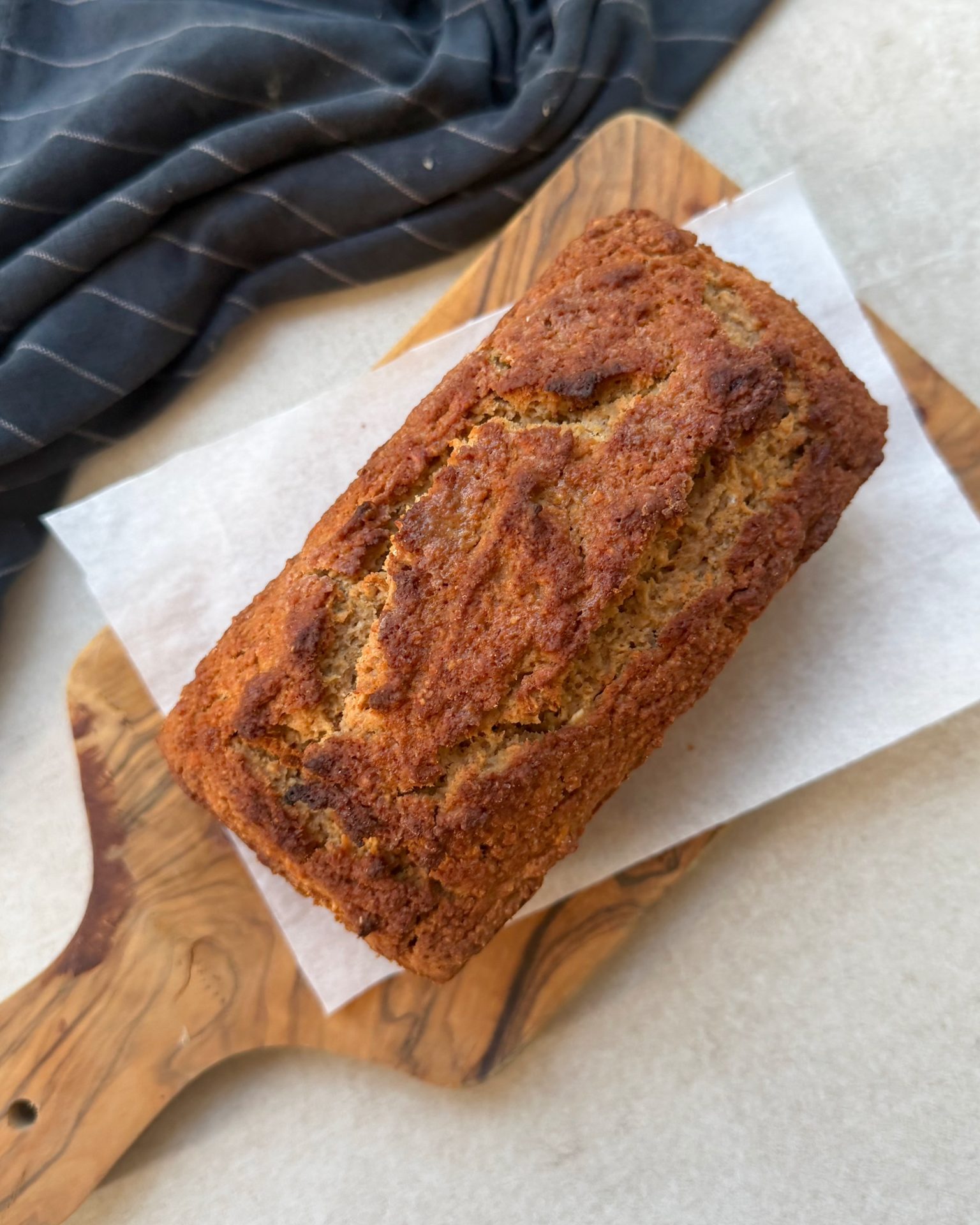
The Recipe
Quick Apple Bread - Gluten-Free, Vegan, High in Fiber
Equipment
- 1 loaf pan (24–25 cm / 9.5–10 inches)
Ingredients
- 300 g rolled oats (or oat flour)
- 400 g applesauce (or apple-banana puree)
- 100–120 g erythritol or date sugar
- 4 tbsp coconut oil (olive oil works as well)
- 3 tsp cinnamon
- 3 tsp baking powder
- 1 pinch of salt
Instructions
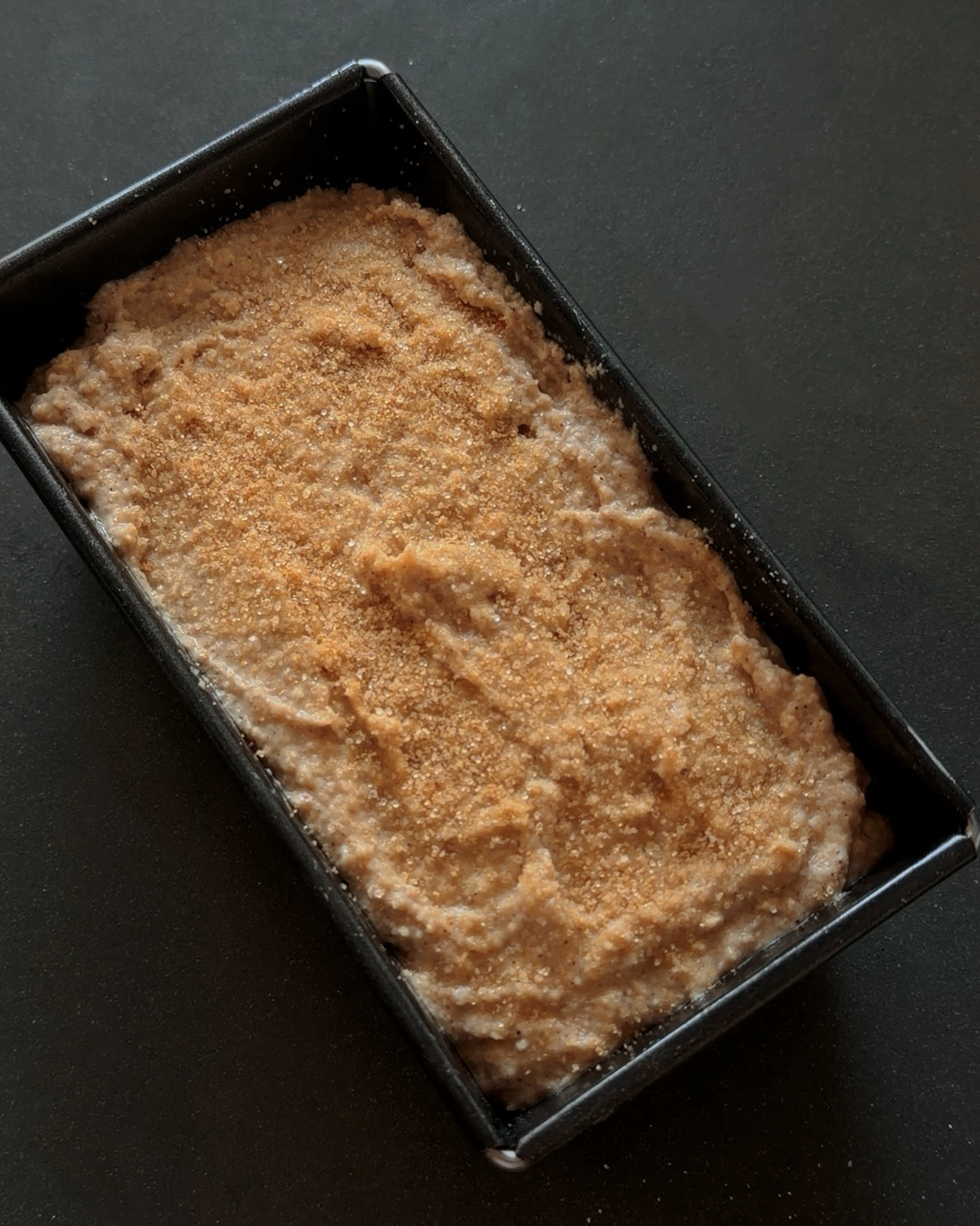
- Preheat the oven to 180°C (350°F). Grease the loaf pan with coconut oil and line the long side with a strip of parchment paper.
- Blend the oats into a fine flour and transfer them to a mixing bowl.
- Add the salt and erythritol, then stir in the applesauce (or banana-applesauce mixture). Mix in the baking powder and cinnamon, then finally add the coconut oil (or olive oil).
- Transfer the batter to the prepared loaf pan and bake for 45-50 minutes. Start checking with a skewer after about 45 minutes.
- Allow the bread to cool completely before removing it from the pan.
- If the top starts browning too quickly after about 35 minutes, loosely cover it with another baking pan, parchment paper, or aluminum foil. This is more likely to happen with the larger loaf than with the smaller version.
- If desired, dust with powdered sweetener before serving. I used finely ground erythritol for decoration.
Notes
| Nutritional Information | per Piece (66 g) | per 100 g |
|---|---|---|
| Calories | 147 kcal | 223 kcal |
| Protein | 3 g | 5 g |
| Fat | 6 g | 9 g |
| Carbohydrates | 18 g | 28 g |
| Dietary fiber | 3 g | 5 g |
Four Things I Learned While Testing
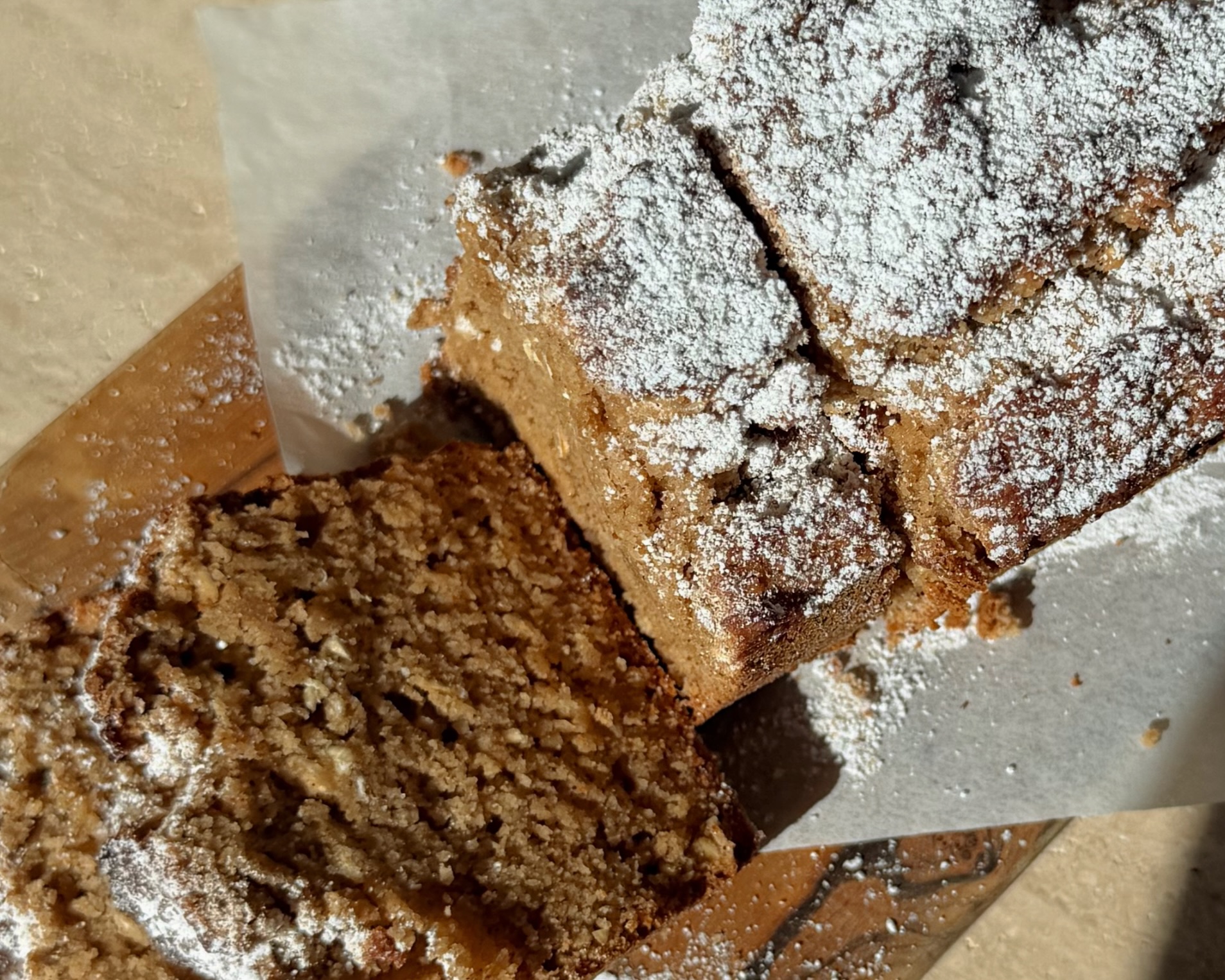
Be sure to let the apple bread cool completely before slicing it. The oat starch doesn’t set properly until the bread has cooled, which ensures it has a good texture. If you slice it while it’s still warm, the first slice may crumble easily. It’s often even easier to slice the next day.
A smaller pan means a much shorter baking time. I also tested the bread in a small pan (16 × 10 cm). In this pan, the dough is significantly flatter than in a large loaf pan and therefore bakes through faster. For half the amount of dough, a baking time of 22 to 28 minutes is usually sufficient. So the baking time is significantly shorter, but not exactly half.
If the surface gets too dark, loosely cover it with parchment paper or reduce the temperature to 160 degrees after 35 minutes. I find lowering the temperature to be a cleaner solution because it slows down the browning process at its source.
Banana variation: Replace 100 g of applesauce with 100 g of mashed banana. The banana adds extra sweetness, so you can reduce the amount of erythritol to about 100 g. It also helps the bread brown a bit more during baking. Without banana, the surface often stays lighter because erythritol, unlike sugar, hardly caramelizes at all.
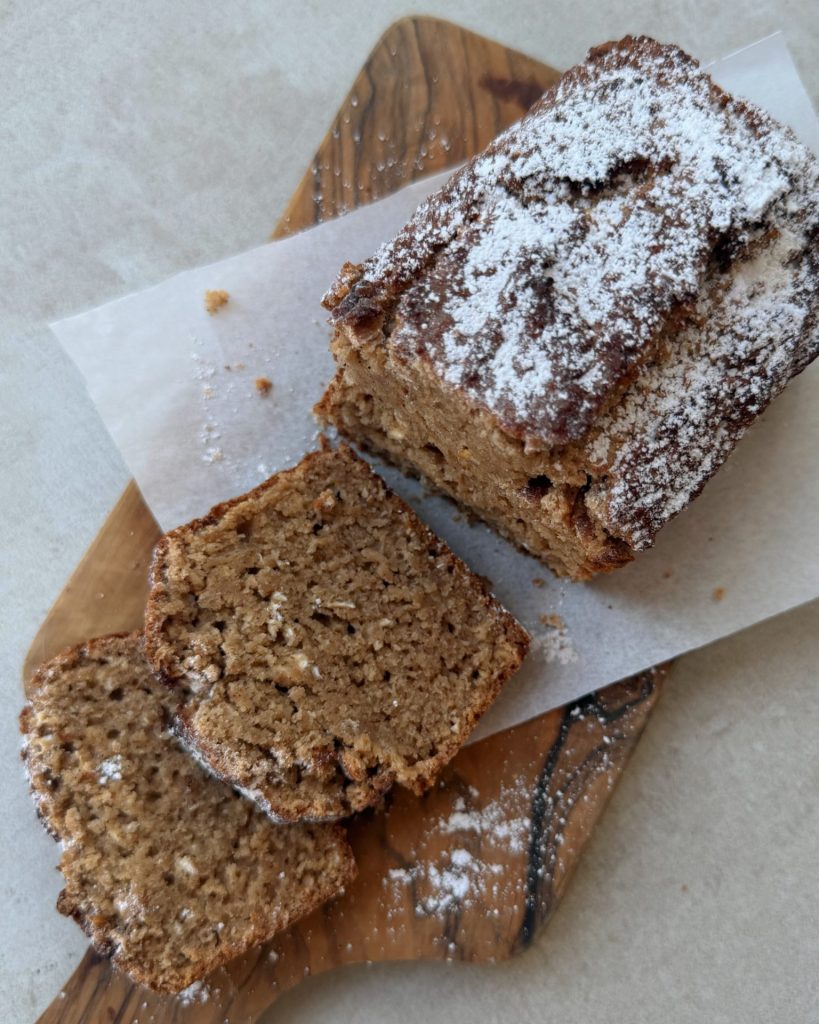
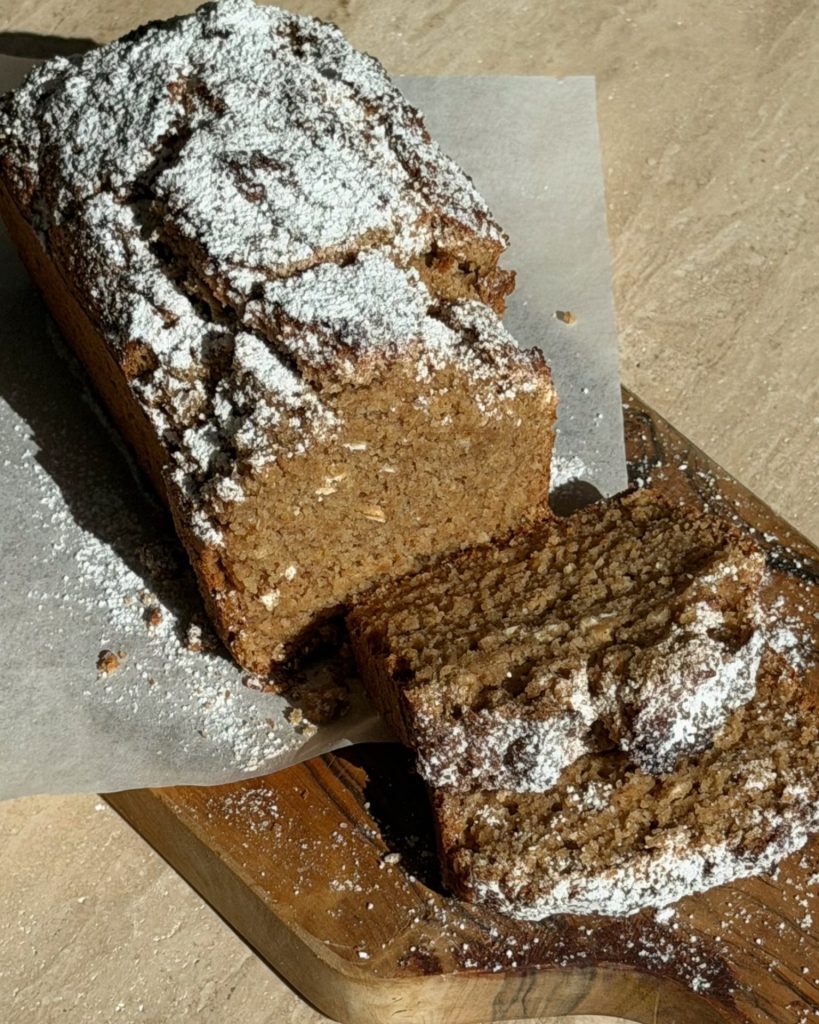
Storage and Freezing
It will keep for 3 days at room temperature if well covered. Do not refrigerate: Cold causes the starch to age faster, and it will become dry and hard within a day.
It’s important to let it cool completely before covering it. If you cover it while it’s still warm, condensation will form and the surface will become soggy.
Freezing works really well for oat bread. Cut it into slices, wrap each one individually in parchment paper, and place them in a container. It will keep for 3 months. Put it straight from the freezer into the toaster or bake it in the oven at 150 degrees for 10 minutes – then it’ll be just like fresh.
Frequently Asked Questions
Do I have to buy pre-ground oat flour? No. Just use rolled oats and grind them in a blender. The weight doesn’t change – 300 g of rolled oats yields 300 g of flour. Soft rolled oats grind into a finer texture than chewy ones.
Can I leave the rolled oats whole? You can, but then it will be more like baked oatmeal than bread. It crumbles more when sliced. If you want some texture: grind 270 g and add 30 g of whole oats.
Is this bread gluten-free? Oats are naturally gluten-free, but they’re often processed in mills that also grind wheat. If you have celiac disease, you’ll need rolled oats that are explicitly labeled as gluten-free.
Do I need to powder the erythritol first? Not in this dough. It’s moist enough that the crystals will dissolve. In drier doughs, unground erythritol can be gritty.
Can I use a different sweetener? Maple syrup or honey work, but they add liquid. In that case, use 50 ml less apple sauce. Xylitol works on a 1:1 basis, just like erythritol.
Can I add an egg? Yes, it makes the crumb a little firmer and helps it brown better. In that case, use 100 g less apple sauce, because the egg itself adds moisture. It’s not necessary, though – the oat starch holds the bread together just fine on its own.
How else can I increase fiber content when baking? The easiest way is to choose the right flour. Whole-grain flour contains significantly more fiber than white flours. Oats, as in this apple bread, are also a good way to increase the fiber content. Everything else – from flaxseed to psyllium husks to bran – is more of a fine-tuning measure.
Have you tried the high-fiber apple bread?
If so, I’d love to hear your feedback in the comments. If you try this recipe, feel free to share your results on Instagram – tag me @annelinawaller and use the hashtag #annelinawaller.
I hope you have fun baking, and I hope you enjoy the apple bread as much as I do. 💛
Yours, Annelina

Leave a Reply